
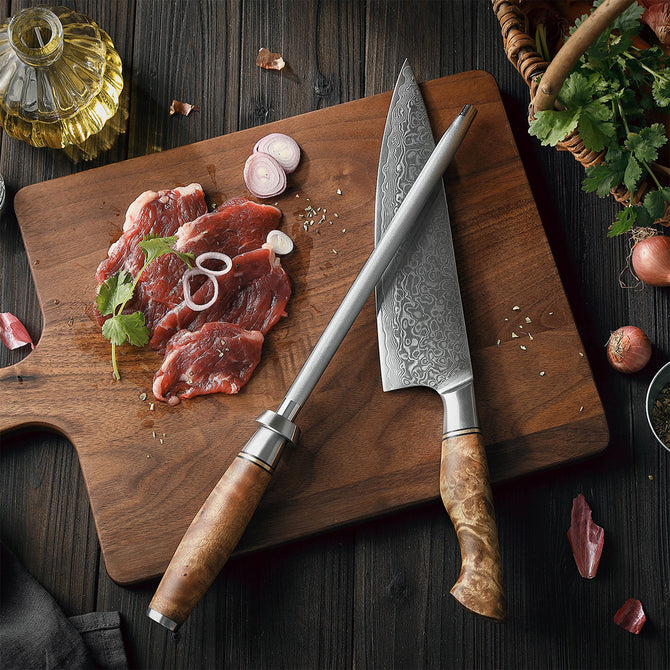
In the culinary world, maintaining the sharpness and longevity of your kitchen blades is paramount. A keen blade not only enhances efficiency but also ensures precision and safety while preparing meals. One often overlooked tool in achieving this is the honing rod. It is an essential instrument for anyone serious about their culinary pursuits, offering a simple yet effective means to keep knives in pristine condition. By regularly honing your blades, you can significantly enhance their performance and lifespan, making the honing rod a crucial investment for any kitchen enthusiast.
Understanding the Role of Honing Rods
Honing rods, sometimes referred to as sharpening steels, play a vital role in the upkeep of your kitchen knives. Unlike sharpening stones which remove material to form a new edge, honing rods straighten and realign the microscopic teeth on the blade’s edge that bend and deform with use.
Key Functions of Honing Rods
- Realignment: Ensures the blade’s edge is straight and sharp.
- Maintenance: Extends the intervals between sharpening sessions.
- Safety: Reduces the risk of slippage due to dull blades.
By incorporating a honing rod into your regular knife maintenance routine, you can maintain optimal sharpness and precision. Discover expert strategies here on how to effectively use honing rods.
Choosing the Right Honing Rod
The market offers a variety of honing rods crafted from different materials, each catering to specific needs and preferences. Understanding the differences can guide you in selecting the most suitable rod for your collection of knives.
Types of Honing Rods
- Steel Rods: Ideal for standard kitchen knives, offering durability and ease of use.
- Ceramic Rods: Provide a finer grit, suitable for delicate and high-carbon blades.
- Diamond Rods: Feature embedded diamond dust, offering aggressive honing for severely dull blades.
Consider the types of knives you frequently use and the level of maintenance required when choosing a honing rod. Learn about our tailored solutions for different knife types and materials.
Benefits of Regular Honing
Regular honing offers numerous advantages beyond mere blade maintenance. It contributes significantly to the overall cooking experience and the longevity of your kitchen tools.
Enhanced Performance and Safety
- Improved Cutting Precision: Ensures clean cuts and reduced food handling time.
- Prolonged Blade Life: Minimizes the need for frequent sharpening, preserving the blade’s integrity.
- Increased Safety: Sharp, well-maintained blades reduce the risk of accidents in the kitchen.
Regular honing not only optimizes performance but also enhances safety and efficiency in the kitchen. Explore advanced guides and tips for incorporating honing into your kitchen routine.
Integrating Honing into Your Routine
Developing a consistent honing practice can be simple and rewarding. By dedicating a few moments before or after meal preparation to hone your blades, you can ensure they remain in top condition.
Steps for Effective Honing
- Hold the honing rod vertically with the tip resting on a stable surface.
- Position the knife at a 15-20 degree angle against the rod.
- Gently draw the blade down the rod, maintaining the angle, and alternate sides.
- Repeat the process several times for optimal results.
Consistency is key to achieving the best results. Find out more about this approach and how to effectively integrate honing into your culinary routine.
In conclusion, honing rods are indispensable tools for maintaining the precision and longevity of kitchen blades. By understanding their role, selecting the right rod, and integrating regular honing into your routine, you can ensure that your knives remain a reliable asset in your culinary endeavors.